
🌍 When “The Office” Expatriates Jim and Pam: How to Take Care of Their Children’s Needs?
The international expansion of The Office is happening! Dunder Mifflin decides to open operations in Brazil, and Jim Halpert is invited to lead this new phase. That means his wife, Pam Beesly, and their kids come along as part of the package.
Amid excitement and some apprehension about the opportunity, they ask the question every expatriate parent would like to ask their boss:
“Michael, what kind of support will our kids receive during this move?”
Michael Scott replies with his usual self-confidence,:
“Kids learn and adjust quickly. You don’t need to worry about them!”
If you’ve ever moved with children, you know reality is quite different.
Adults and companies tend to focus on practical matters: visas, housing, school, job, paperwork. We end up expecting children to simply “go along with it.”
But they are experiencing a transition just as complex as the adults— with one big difference: they didn’t choose to go. On top of that, they have fewer resources to understand what it all means.
For a child, moving to another country can mean leaving their grandparents behind, losing friends, leaving their school, not understanding (or not being understood in) the new language, or even not knowing how to ask to go to the bathroom on the first day of school. In other words, their safe harbors are suddenly out of reach.
If Jim and Pam’s family moved to Brazil, imagine the first day of school. Classmates greeting them with hugs, while the kids’ thoughts are screaming: “Help! They’re invading my personal space!”. Then the teachers start speaking quickly, and the child just wants someone to rescue them from “this strange place where I don’t understand anything, please!”. And to top the day off, everyone is eating rice and beans for lunch, and like any good US American, the child would ask: “Where’s my sandwich and my chips?”.
There is a widespread idea that children are “like sponges”: they learn the language quickly, make friends easily, and move on with life without major impacts.
In general, kids learn faster than adults. But that doesn’t mean they don’t feel fear, sadness, insecurity, or even anger.
The tendency is not to verbalize these feelings but to express them through behavior such as regression, irritability, isolation, or heightened sensitivity can be ways of saying: “I don’t understand what’s happening.”
Therefore, resilience is not the absence of suffering, but the ability to move through challenges. And for that to happen in a healthy way, support is essential.
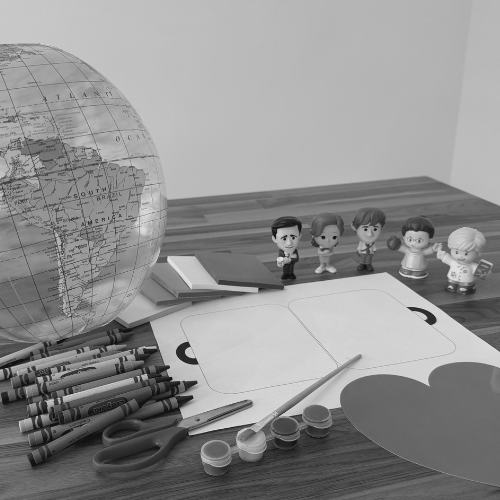
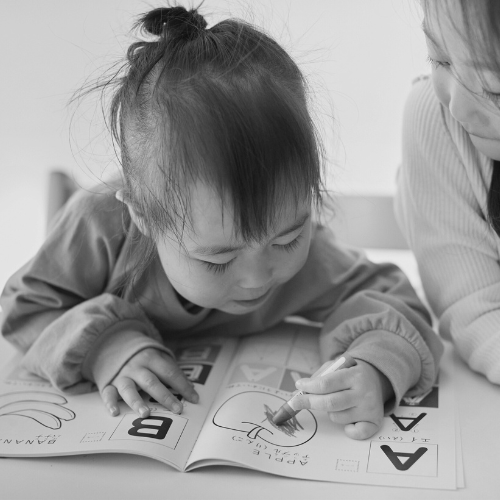
Throughout my experience living abroad, I learned that intercultural training can also support children through professional and personalized guidance. It’s not a corporate or a formal lecture about cultural differences. These sessions use games and playful activities to create space for questions and expression of emotions, helping children understand that change is part of life, cultures are different, feeling afraid is natural, it’s okay to miss home and cry, making mistakes in a new language is nothing to be ashamed of, and that some bonds remain stable even across borders.
When a child understands that discomfort is part of the process and comfort can still come from what remains stable, such as the presence of their caregivers, they no longer suffer alone. Intercultural training transforms the unknown into something less frightening, using a language children can understand.
When properly supported, the international experience can be extraordinary for a child. It fosters flexibility, empathy, curiosity, and tolerance for differences. It also teaches them that there are many ways to live in the world. They carry these lessons throughout life, allowing themselves to make healthy choices and strengthening their self-acceptance.
However this does not happen automatically. Without support, a child may feel they belong nowhere. With support, they discover they can belong to the world.
Global Career Consultant & Intercultural Trainer
Other Themes To Explore





What started as one coloring book is becoming something bigger. Jessica Gabrielzyk introduces a new series designed to help children understand culture, identity, and the world around them—one page at a time.