As a Brazilian living in the USA, I have embraced the mission to bring to light the discussion about the expectations of the job market on the English skills of migrants. So far, I have experienced a reality in which I had to work much harder to have my professional value recognized because I am not a native speaker.
Here is my polemic message on this topic:
For organizations: please stop being unrealistic regarding diversity. Either you live in the effortless comfort zone of exclusive native speakers, or you choose to benefit from diverse solutions, truly providing equal opportunity by listening to voices with an accent.
🎧 Curious about building a career abroad?
Don’t miss Renata Takacoura’s exclusive content, where she shares honest the challenges, growth, and reinvention of professional life in a different country.
👉 Click here to full list and get inspired by real stories that reflect your own journey!
For teachers and schools: please stop profiting from the myth of “native speaker perfection” and respect your students’ heritage. Teach us how to communicate effectively, incorporating our accent, without picking on pronunciation as if this were the way to perfect our non-native language.
For migrants: all you need is to be understood. Your non-native language needs to be improved only if you are not functional in this society.
For all of us: truly listen to accented voices, and stop crushing migrants’ self-confidence by looking down on them because of their accent.
I know this is a utopian speech, but it is my way of starting a daily mindset revolution toward the world I want my child to inherit.
Other Themes To Explore
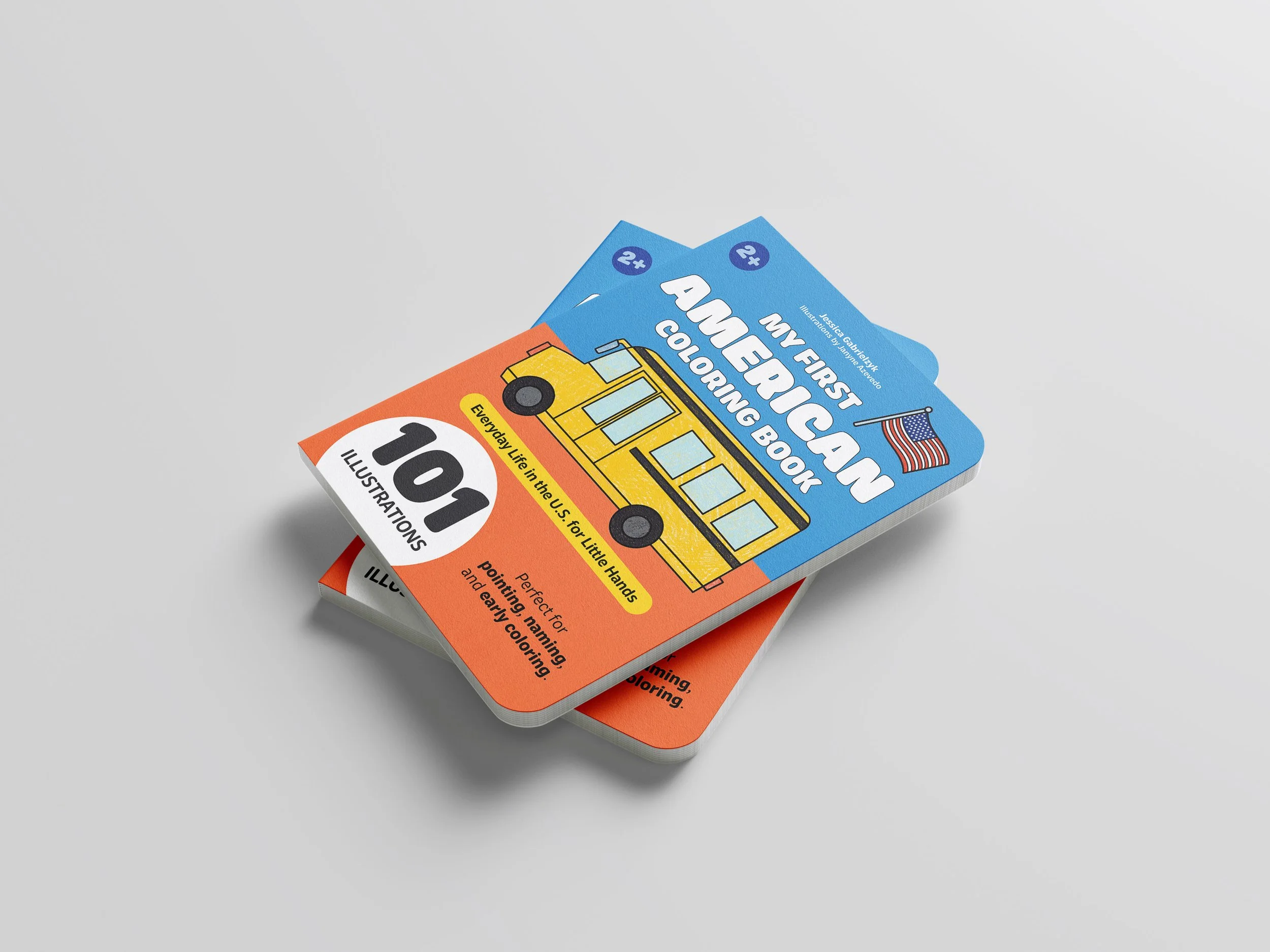
What started as one coloring book is becoming something bigger. Jessica Gabrielzyk introduces a new series designed to help children understand culture, identity, and the world around them—one page at a time.
“Everything is dinosaurs or princesses.” A homeschooling mom in Australia shares what was missing—and how teaching real-life culture helps kids living abroad feel more connected.
What if Jim and Pam from The Office were sent to Brazil with their kids? Behind the humor lies a deeper question: what do children really experience when they move abroad? From language confusion to emotional disorientation, this piece explores what expat kids need—and why support matters more than we think.
Not all culture is taught through flags and holidays. For toddlers, it’s in the small things — breakfast, music, parks, and play. This new coloring book reflects real American life through scenes young children recognize and relate to, helping them explore with curiosity, not confusion.
Between accents and assumptions, a Brazilian mom in the U.S. reflects on what it takes to be seen as competent in a non-native language—and why it matters for her child’s future too.
For some kids, sleepovers are a rite of passage. For others, they’re off-limits. Brazilian parents abroad face unique challenges navigating this cultural clash.
What if color could help you feel more like yourself again? On September 27, join image consultant Aline França in Amstelveen for a creative and energizing masterclass on using color to express your identity, especially while living abroad.
In Norway, it’s illegal to advertise to children under 12 — meaning no flashy toy commercials during cartoons. 🇳🇴✨ A cultural shift that prioritizes child development over consumerism, and a wake-up call for expat parents navigating new media rules abroad.
Flow tells a powerful, dialogue-free story about adaptation and friendship. Find out why this award-winning animation is the perfect film for families!
Take a trip around the world without leaving your couch! Check out this list of international family movies that celebrate culture, adventure, and storytelling.
Now it’s official: Apple has announced live conversation translation with AirPods in iOS 19! A perfect new feature for bilingual families and expat moms, making communication across languages easier than ever. 🌍🎧
Bilingual parenting isn’t easy—but it’s powerful. Learn how multicultural families like Fabiola’s are keeping heritage languages alive and raising global citizens.
Immigrant parents rebuild life from scratch while raising children — transforming challenges into resilience, flexibility, and hidden strengths that benefit the workplace.